Kuliah di
Singapore
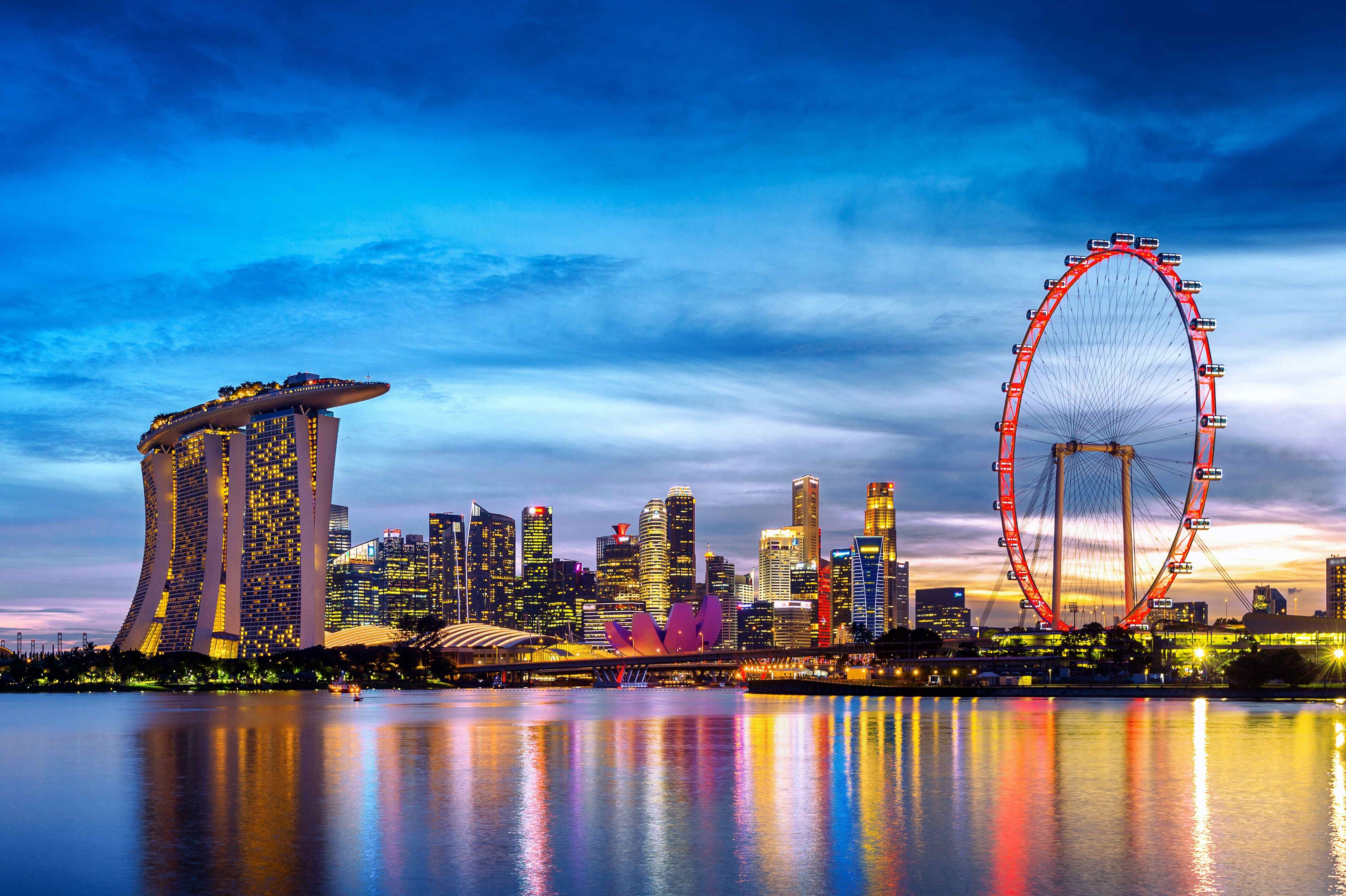
Known for being a global financial center in South-east Asia, Singapore also leads in the education scene. With efficient city planning, convenient transportation, along with a tolerant and friendly social atmosphere, Singapore is a perfect study destination for young dreamers. International students, especially from Indonesia, can benefit from the country's strong education system and its reputation for high-quality universities and research institutions.
This country is also recognized to be the smartest and safest country in the world, offering a secure environment for Indonesian students to focus on their academic and personal growth. Singapore boasts the best quality of life in Asia and is ranked 6th best in the world, making it an attractive destination not only for education but also for enjoying a modern, vibrant lifestyle.
Informasi Edukasi
- Singapore’s world-class education system offers high-quality programs that are recognized globally, giving Indonesian students an international edge.
- The country’s strong emphasis on technology and innovation provides Indonesian students with opportunities to study in cutting-edge fields like AI, robotics, and biotechnology.
- Singapore’s location as a global financial hub offers Indonesian students access to top-tier internships and career opportunities in finance, business, and trade.
- The multicultural environment in Singapore allows Indonesian students to experience diverse cultures and expand their global network of peers.
- Singapore is known for its excellent public safety, ensuring a secure living and studying environment for international students, including those from Indonesia.
- International students, including Indonesians, benefit from Singapore’s high standard of living, with modern facilities, efficient public transport, and a clean, well-organized city.
- Singapore’s universities collaborate with global institutions, offering Indonesian students access to a wide range of exchange programs and research partnerships.
- With a variety of scholarship programs available, Indonesian students can find financial support to help make studying in Singapore more affordable.
- Singapore’s strong ties with global industries allow Indonesian students to access hands-on learning experiences and internships that enhance their employability.
- The diverse range of educational institutions in Singapore, including polytechnics, universities, and language centers, cater to different academic needs and interests for Indonesian students.
- Singapore's fast-paced and modern lifestyle offers Indonesian students exposure to one of Asia’s most dynamic and innovative environments.
- With English as one of its official languages, Indonesian students can easily communicate and study in an internationally recognized language, improving their language proficiency.
- Singapore is a melting pot of Asian cultures, making it an ideal place for Indonesian students to learn about regional history, languages, and traditions.
- The country's high ranking in global safety and healthcare ensures that Indonesian students have access to excellent medical services and a secure living environment.
- Singapore’s strong economy offers plenty of job opportunities for Indonesian students, especially in sectors like finance, technology, engineering, and healthcare.
Student Pass
In accordance with immigration regulations, if you're going to study in Singapore, you'll need to get a Student Pass. To apply for a Student Pass, you must be accepted into an approved full-time course in Singapore.
For Indonesian students, the application process requires specific documents including your birth certificate (notarized and translated), family/household card (Kartu Keluarga), highest level of education certificate and transcript (notarized and translated), copy of passport, and 4 recent passport-sized photos with white background.
The application must be submitted online through the ICA website at least 2 months but not more than 3 months before course commencement. Upon approval, you'll receive an In-Principle Approval (IPA) letter. After arriving in Singapore, you must complete the Student Pass formalities within the specified timeframe, which includes fingerprinting, photo-taking at ICA, and a mandatory medical examination. The medical check-up typically includes a chest X-ray to screen for tuberculosis and blood tests for infectious diseases like HIV. The Student Pass application fee is approximately SGD 30 (around IDR 360,000).
Accommodation
As in any country, housing costs vary greatly depending on what type of accommodation you live in, if you share it with someone, and how close to the city center you are. As a student, the best bet to save some money would be to find a roommate and live in a shared place.
The best option, however, would be to seek accommodation through the school where you'll be studying. For Indonesian students, monthly accommodation costs typically range as follows: on-campus dormitories cost SGD 500-800 per month, shared HDB (public housing) rooms cost SGD 600-1,000 per month, and private studio apartments range from SGD 1,800-3,000 per month.
University-recommended co-living providers like HomeyDays and Cove Living typically start at SGD 2,300 per month for ensuite rooms with utilities and Wi-Fi included. Most accommodations require a security deposit equivalent to one month's rent and a minimum lease term of 3-6 months.
It's advisable to arrange accommodation before arriving in Singapore, as you'll need time to complete other formalities like medical check-ups and Student Pass collection. Living in areas like Geylang, Balestier, or Kallang offers proximity to universities while being more affordable than central locations.
Part-time Job
Besides students from public universities, you cannot take any part time job in Singapore. More specifically, international students can only work part-time if they are enrolled full-time at approved institutions, which include public universities (NUS, NTU, SMU), local polytechnics, and select private institutions registered with the Ministry of Education or Council for Private Education.
Students from these approved institutions are permitted to work up to 16 hours per week during term time and unlimited hours during official vacation periods without requiring a separate work permit. This work exemption applies automatically to eligible students with valid Student Passes you do not need to apply for additional permission, though you may need to notify your institution.
However, certain job sectors are strictly prohibited, including nightlife establishments, massage parlours, and entertainment outlets. Students enrolled in private institutions not on the approved list, language schools, or short-term courses are not permitted to work at all.
Violating these work restrictions can result in Student Pass cancellation, fines, deportation, and immigration blacklisting. On-campus jobs and curriculum-based internships are generally the safest options for international students.
Singapore has education system that includes six years of primary school, followed by four to six years of secondary school, and one to three years of postsecondary school. The curriculum for primary schools is common for all students in years one to four.
For Indonesian students seeking admission to Singapore primary and secondary schools, enrollment is through the Admissions Exercise for International Students (AEIS) or the Supplementary Admissions Exercise for International Students (S-AEIS), with tests conducted in Singapore. The S-AEIS applications for 2026 have already closed, with tests conducted from March 2-6, 2026.
Students who want to apply to university stay in secondary school for an additional two years to take A-level courses, as part of the Integrated Program. The Integrated Programme (IP) is a six-year customized program that allows high-performing students to bypass O-level examinations and proceed directly to A-levels. For Indonesian students, admission to Junior Colleges requires either qualifying through the School Placement Exercise for Returning Singaporeans (SPERS-JC/MI) or passing the Junior College Principals Academy Certification Test (J-PACT) conducted by Principals Academy Inc. Applications for the 2026 intake were conducted from July to October 2025, with selection tests and interviews for shortlisted applicants.
Those who do not do that have multiple postsecondary options: Polytechnics, the Institute of Technical Education (ITE), Junior Colleges, a Polytechnic Foundation program and a small set of Arts Institutions. For Indonesian students applying to polytechnics, the Direct Admissions Exercise (DAE-Foreign) accepts Year 11 Semester 2 Indonesian High School results taken in the current year or Indonesian High School results from 2021 onwards.
Most polytechnics require minimum scores of 70% or Grade B in English, Mathematics, one relevant subject, and two best subjects. From Academic Year 2026, polytechnic fees are differentiated between ASEAN and non-ASEAN students, with Indonesian students benefiting from lower ASEAN rates.
The Polytechnic Foundation Programme (PFP) has been restructured from 2026 onwards into a cluster-based programme with three broad clusters: Sciences, Humanities/Art/Media/Business, and Design/Engineering/Technology. However, the PFP is primarily designed for Singapore N-level students with raw ELMAB3 aggregate scores of 12 points or better.
For university admission, Indonesian students with Ijazah SMA must achieve a score of not less than 85 in most subjects (excluding Moral Education, Art, Bahasa Indonesia) and must submit English proficiency test scores such as IELTS (minimum Overall 6, Writing 6, Speaking 6) or TOEFL iBT (minimum 90, speaking 25 for tests before 2026; minimum Overall 5, speaking 5 for tests from January 2026 onwards).
Applications are considered more favorably if students also submit at least 3 GCE Advanced Level subjects or Advanced Placement (AP) tests with strong scores. The Institute of Technical Education (ITE) does not admit international students with foreign qualifications to its full-time courses, limiting this pathway to returning Singaporeans only.
For Arts Institutions like LASALLE College of the Arts and NAFA (Nanyang Academy of Fine Arts), international students residing overseas are encouraged to apply as early as August for the following year's intake, with applications for the August 2026 intake open until places are filled.
Geo & Budaya
Universitas Terkemuka di Singapore
Search:


Negara Lainnya


Connect with SUN Education